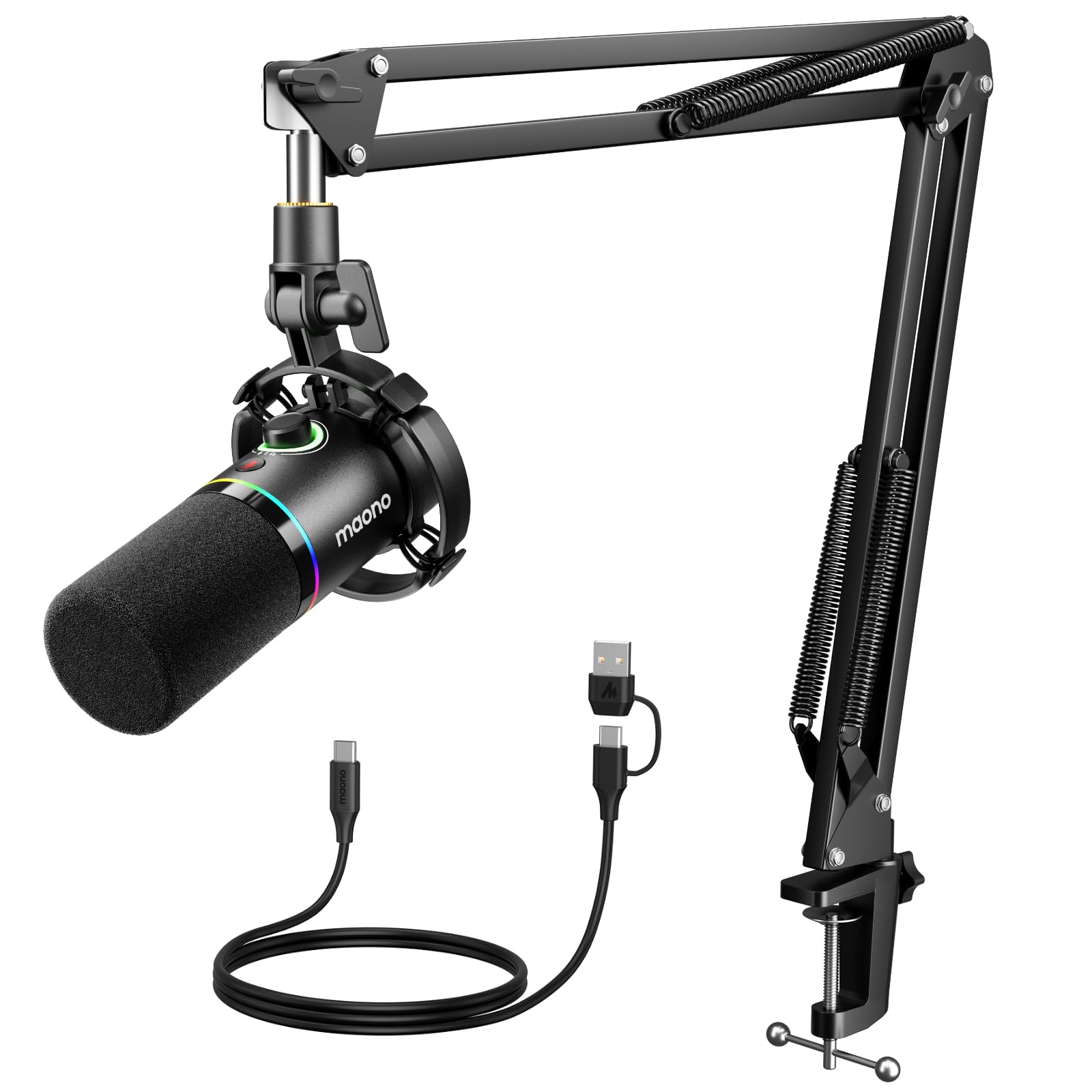
The MAONO PD200X pairs a dynamic microphone with USB and XLR connections, onboard controls, software adjustments, and a supplied boom arm.
This review maono pd200x guide looks at how that combination fits streaming, podcasting, voice-over, and home recording workflows.
MAONO PD200X Review Summary
The quick verdict
2,000+ ratings
Read Amazon ReviewsMAONO PD200X
A practical fit for streamers and podcasters who want USB convenience, XLR flexibility, onboard monitoring, and a boom arm in one kit.
- Dynamic microphone with a cardioid polar pattern, designed to emphasize vocals and reduce unwanted background noise.
- Specified frequency response of 40 Hz to 16 kHz, covering a broad range of vocal detail.
- USB and XLR outputs: USB supports plug-and-play computer connection; XLR connects to professional interfaces, mixers, or portable PA systems.
- MAONO Link software in USB mode offers vocal adjustments, EQ, limiter and compressor controls, plus nine RGB color options and lighting on/off control.

Pros
- USB and XLR connections make it adaptable to both computer-based and mixer-based setups.
- The mute key, gain adjustment, headphone-volume control, and monitoring jack make common recording tasks accessible on the microphone.
Consider before buying
- An XLR cable is not included, so users choosing an interface or mixer connection must provide one.
- Software adjustments and lighting controls are available only in USB mode, so XLR users should plan on shaping audio through their external setup.
Read the full review summary
The PD200X is designed to move between a simple computer setup and a more expandable audio rig.
USB provides plug-and-play use with a desktop or laptop, while XLR offers an analog output for an interface, mixer, or portable PA system.
Its cardioid pickup pattern is intended to emphasize vocals and reduce unwanted background sound, and its stated frequency response spans 40 Hz to 16 kHz.
It is especially appealing to creators who value convenient controls and a ready-to-position setup.
The microphone has a combined gain and headphone-volume knob, a one-click mute key with an LED indicator, and a 3.5 mm headphone jack for monitoring. MAONO Link adds EQ, limiter, compressor, and lighting adjustments in USB mode.
The included boom arm and shock mount round out the kit, though buyers planning to use XLR will need to source an XLR cable separately.
The buying factors
MAONO PD200X Scorecard
Editorial scores reflect listed features and buyer fit; they are not laboratory measurements or customer ratings.
Connection flexibility
USB and XLR support a straightforward computer setup now and a mixer or interface workflow later.
Onboard workflow controls
The gain and headphone-volume knob, mute key, and headphone jack put useful recording controls on the mic.
Software customization
USB mode supports EQ, limiter, compressor, vocal adjustments, and configurable RGB lighting through MAONO Link.
Included setup equipment
The kit includes a boom arm, shock mount, adapter, and USB cable, reducing the number of pieces to source for a USB setup.
Vocal-focused design
The dynamic capsule and cardioid pattern are aimed at emphasizing vocals and reducing unwanted background noise.
XLR readiness
The XLR output supports external audio equipment, but the kit does not include the cable needed for that connection.
Key Features and Specifications of MAONO PD200X
- Dynamic microphone with a cardioid polar pattern, designed to emphasize vocals and reduce unwanted background noise.
- Specified frequency response of 40 Hz to 16 kHz, covering a broad range of vocal detail.
- USB and XLR outputs: USB supports plug-and-play computer connection; XLR connects to professional interfaces, mixers, or portable PA systems.
- MAONO Link software in USB mode offers vocal adjustments, EQ, limiter and compressor controls, plus nine RGB color options and lighting on/off control.
- Combined control knob adjusts microphone gain and headphone volume; a one-click mute key has an LED indicator.
- A 3.5 mm headphone jack supports monitoring while recording.
- The package includes a shock mount, adjustable boom arm, USB-C to USB-A/C cable, and 5/8-inch to 3/8-inch adapter; an XLR cable is not included.
Pros and Cons of MAONO PD200X
Pros
- USB and XLR connections make it adaptable to both computer-based and mixer-based setups.
- The mute key, gain adjustment, headphone-volume control, and monitoring jack make common recording tasks accessible on the microphone.
- Software-based EQ and dynamics controls provide a way to shape the USB sound without relying only on external equipment.
- A boom arm and shock mount are included, giving buyers a starting point for positioning the microphone at a desk.
Consider before buying
- An XLR cable is not included, so users choosing an interface or mixer connection must provide one.
- Software adjustments and lighting controls are available only in USB mode, so XLR users should plan on shaping audio through their external setup.
- The supplied boom arm needs desk space and a suitable mounting position; check your workspace and attachment needs before choosing a kit with an arm.
Who Should Buy MAONO PD200X?
Good fit
Consider the PD200X if you are building a streaming or podcasting desk and want a single microphone that can begin with USB and move to XLR equipment later.
The included boom arm and shock mount help make it a more complete starting kit than a microphone alone, while the headphone jack and combined control knob make routine monitoring and level changes convenient.
It also suits creators who want some sound-shaping options without starting with a separate hardware processor. In USB mode, MAONO Link supports EQ, limiter, and compressor adjustments, along with lighting changes.
These controls give you room to tune a voice setup, though getting a useful result still depends on microphone placement and how you configure the software.
Before buying, decide which connection you will use first. USB is the simpler route for a computer; an XLR setup requires a compatible interface, mixer, or PA system and a separately obtained XLR cable.
Also consider whether the included arm can fit your desk and whether its positioning range matches your recording space.
Who should skip it
Skip this kit if you need a handheld microphone for moving around a stage or room: its supplied arrangement is built around a desk boom arm and close vocal recording.
It may be a poor match if you want all software tone controls while connected over XLR, or if you expect an XLR cable to be included. Confirm your preferred workflow and cable needs before committing.
How the MAONO PD200X Fits a Creator Desk
USB convenience with an upgrade path
The dual outputs let the microphone serve a basic computer setup and a more involved audio chain. USB is the direct route for recording on a desktop or laptop, while XLR connects to external audio gear.
That flexibility can help a creator avoid replacing the microphone when the rest of the setup changes, but an XLR workflow calls for a separate cable and compatible equipment.
Controls that matter during a session
A physical mute key and gain control are useful when recording live commentary or speaking between takes.
The LED indicator offers a quick visual cue for mute status, and the headphone jack provides a way to monitor audio while recording. The shared knob also adjusts headphone volume, keeping two regular adjustments close at hand.
Software options and their limits
In USB mode, MAONO Link can adjust EQ, limiting, and compression, as well as vocal tone and RGB lighting.
These are practical tools for tailoring a creator setup, especially when no separate processing hardware is part of the chain.
The software controls are tied to USB mode, so buyers planning to connect by XLR should expect to use their mixer or interface for those adjustments.
Desk setup and microphone placement
The included adjustable boom arm and shock mount provide a way to place the mic near the speaker while keeping it off the desk surface.
A cardioid pattern is intended to prioritize sound in front of the microphone, so placement and speaking direction remain important to the result. Check the arm's mounting fit and the space available around your desk before setting up.
Alternatives to MAONO PD200X
Vocal Dynamic Microphones alternative
6,000+ ratings
Read Amazon ReviewsFIFINE AmpliGame AM8T
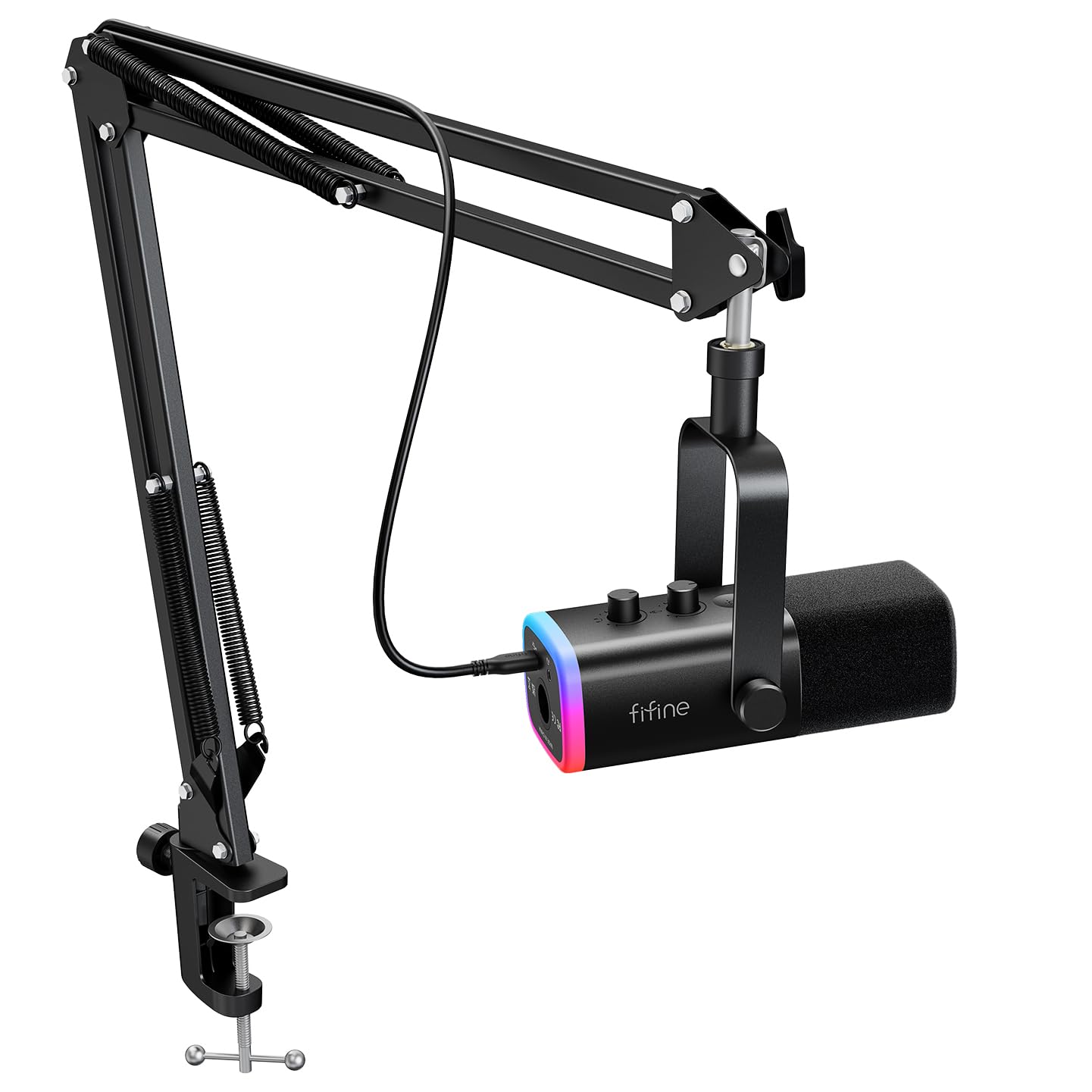
Consider the AM8T if straightforward on-mic RGB control and headphone-volume adjustment are central to your gaming setup.
The PD200X is the better fit if you specifically want MAONO Link software adjustments such as EQ, limiter, and compressor controls in USB mode.
- The FIFINE AM8T also offers USB/XLR connectivity and a boom arm, with a mute button, gain knob, headphone jack, headphone-volume control, and RGB controls on the microphone.
- Its USB cable is 8.2 feet, and its XLR cable is not included.
- The MAONO PD200X combines a boom arm kit, USB/XLR connectivity, USB-mode software adjustments, and a 3.5 mm monitoring jack.
Vocal Dynamic Microphones alternative
500+ ratings
Read Amazon ReviewsMAONO PD400X
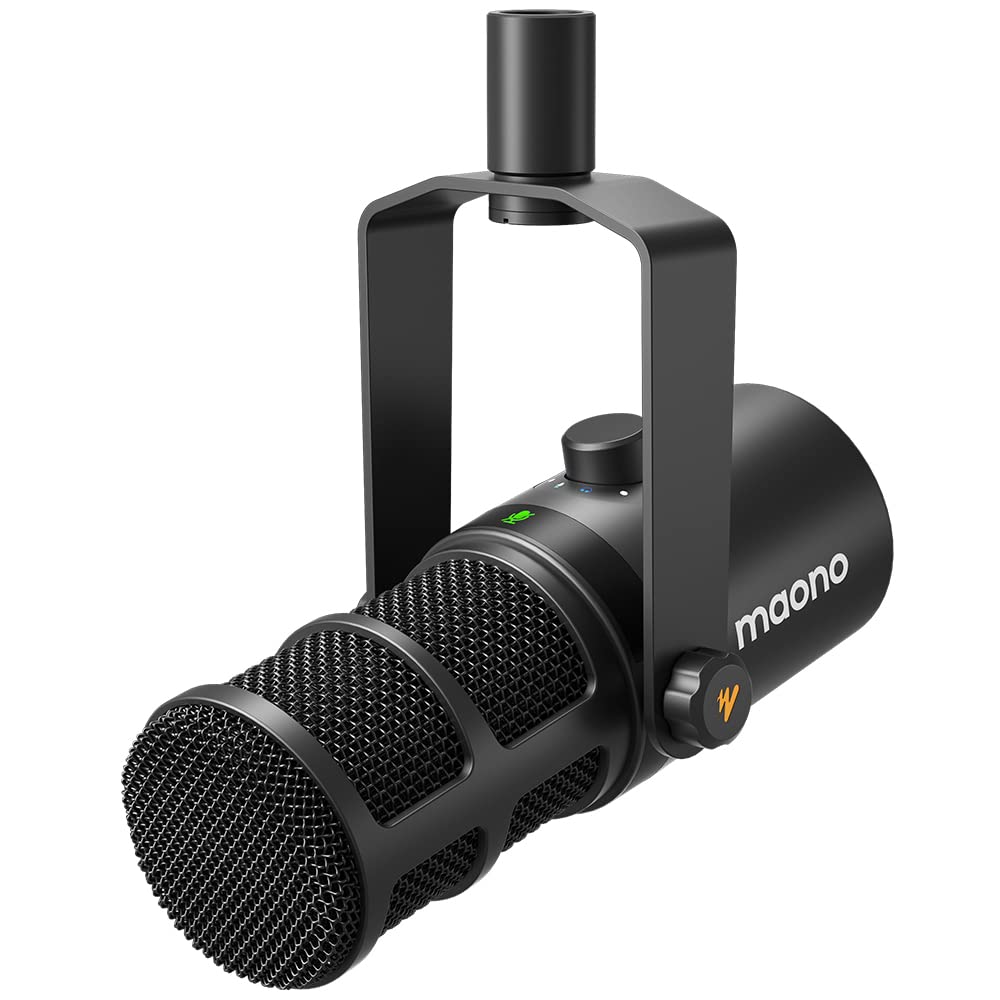
Choose the PD400X if monitor-mix adjustment and its broader software workflow are more important than receiving a boom arm in the package. The PD200X is a more convenient starting kit for someone who wants arm support included.
- The MAONO PD400X is a USB/XLR dynamic microphone with a digital knob for gain, headphone volume, and monitor mix, plus a touch mute control.
- Its software offers standard and advanced modes with EQ, limiter, compressor, and other adjustments; the supplied description does not list a boom arm among its included features.
- The MAONO PD200X comes as a kit with a boom arm and shock mount, plus USB-mode software controls and a combined gain and headphone-volume knob.
Is MAONO PD200X Worth It?
The MAONO PD200X is worth considering for desk-based streamers, podcasters, and voice-over creators who want a dynamic USB/XLR microphone with useful onboard controls, monitoring, software customization, and a supplied boom arm.
Its strongest appeal is the combination of a simple USB starting point and an XLR route for a later or existing audio setup.
Check the arm's fit with your desk, and plan for a separate XLR cable if you will connect to a mixer or interface. Also keep in mind that MAONO Link features are for USB mode.
If those tradeoffs fit your workflow, the PD200X is a versatile creator microphone kit to shortlist.
Your review at a glance
2,000+ ratings
Read Amazon ReviewsMAONO PD200X
A practical fit for streamers and podcasters who want USB convenience, XLR flexibility, onboard monitoring, and a boom arm in one kit.
- Dynamic microphone with a cardioid polar pattern, designed to emphasize vocals and reduce unwanted background noise.
- Specified frequency response of 40 Hz to 16 kHz, covering a broad range of vocal detail.
- USB and XLR outputs: USB supports plug-and-play computer connection; XLR connects to professional interfaces, mixers, or portable PA systems.
- MAONO Link software in USB mode offers vocal adjustments, EQ, limiter and compressor controls, plus nine RGB color options and lighting on/off control.